Key Takeaways:
- Right-of-Way Rules Decision: Fault in a Florida T-bone crash depends entirely on who violated statutory right-of-way laws, not which vehicle suffered side-impact damage.
- The 51% Fault Trap: Being T-boned does not automatically guarantee full recovery. Under Florida’s modified comparative negligence law, if an insurer shifts 51% or more of the blame onto you, you recover nothing.
- Beyond the Two Drivers: Non-contact “phantom” drivers and fleeing motorists can still be held liable for triggering an intersection collision.
- Police Reports Aren’t Final: Under Florida’s Accident Report Privilege, police crash reports and citations cannot be used as evidence in a civil trial.
The light was green, you were already through the intersection, and a car that never slowed down T-boned you. In the ambulance, fault feels obvious. Days later, however, the other driver’s insurer tells a completely different story, claiming you were speeding, drifting, or somehow could have avoided the crash. The question you assumed was settled becomes the only one that matters: in a T-bone accident, who’s at fault? Since 1989, Frank Eidson, P.A. has answered that question for injured drivers across Orlando and Central Florida, where the legal truth is rarely the version the insurance company is selling.
Who Is at Fault in a T-Bone Accident, the One Who Hit or Got Hit?
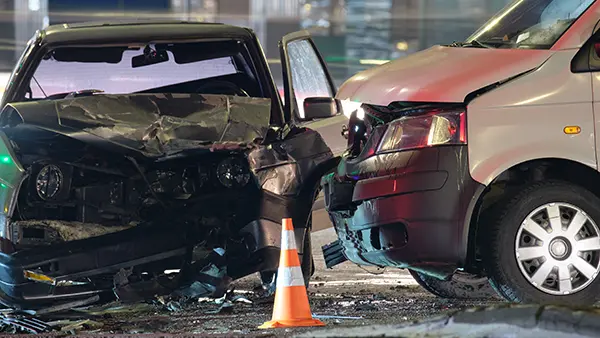
A T-bone accident, also called a side-impact or broadside collision, occurs when the front of one vehicle strikes the side of another, most often at an intersection where traffic paths cross. What surprises most injured drivers is that Florida law does not determine liability based on which car took the side impact and which took front-end damage. Fault depends entirely on which driver had the legal duty to yield. Usually, that points directly to the driver who ran a red light or rolled through a stop sign. Because physical damage alone does not prove fault, an insurer’s main strategy for lowering its payout is to shift a portion of that blame back onto you.
How Does Florida Right-of-Way Law Decide T-Bone Fault?
Determining who is at fault in an intersection accident comes down to right-of-way. Florida sets rules through key traffic statutes, each governing a different T-bone crash scenario. Every statute answers the same core question: which driver had the legal duty to yield before the collision became unavoidable?
- Who’s at Fault in a Left-Turn T-Bone?
Under §316.122, a driver turning left must yield to any oncoming vehicle close enough to pose an immediate hazard. This duty extends to vehicles lawfully passing on the left of the turning car. If a left-turning driver cuts across your lane and causes a side-impact crash, Florida law presumes that driver is at fault because the statute placed the burden on them to wait. Solid green lights do not grant protected turns; only a green arrow confers right-of-way. Without that arrow, the legal duty to yield remains entirely on the turning car.
-
Who’s at Fault in a T-Bone Accident When a Driver Runs a Red Light or Stop Sign?
When a driver ignores a traffic control signal and T-bones your vehicle, they are the at-fault party regardless of which car took the brunt of the impact. Under Florida law, this duty is split across two core statutes:
- Red light: Under§316.075, a driver facing a steady red must stop before the crosswalk or intersection and remain stopped until the signal turns green.
- Stop sign: Under§316.123, a driver must come to a full stop and yield to traffic already approaching closely enough to be an immediate hazard.
Florida law gives the driver with the right-of-way a distinct advantage at yield-sign intersections. Under §316.123(3), if a driver passes a yield sign without stopping and causes a collision, the law automatically presumes they failed to yield. This creates prima facie evidence of fault, shifting the legal burden onto that driver to prove otherwise.
-
Who’s at Fault In An Uncontrolled Intersection or at a Four-Way Stop?
At a four-way stop, §316.123 gives the first driver to stop the right to proceed first, and when two arrive together, the driver on the left must yield to the driver on the right. At an intersection with no signals or signs at all,§316.121 gives the right-of-way to the car already in the intersection and applies the same driver-on-the-right rule when two enter at once. A dark or inoperative signal, common after a Central Florida storm, is treated as a four-way stop under§316.1235, so a driver who rolls through a blacked-out light without stopping and t-bones you is at fault.
-
Who’s at Fault in a T-Bone Accident When Both Drivers Enter on a Yellow Light?
Under §316.075, a steady yellow warns that the light is about to turn red, meaning a driver who enters the intersection after the change has run a red light. When two drivers misjudge that window and collide, insurers routinely assign a share of blame to both. A yellow-light T-bone accident frequently results in a 50/50 or 60/40 fault split, which places your claim in dangerous territory where Florida’s comparative negligence threshold can erase your recovery entirely. This makes the evidence that reconstructs signal timing a decisive factor in your claim.
Can the Driver Who Was T-Boned Still Be Assigned Part of the Blame?
Yes, and anticipating that tactic is what protects your recovery. Florida courts treat the right-of-way presumption as rebuttable, not absolute. If the driver with the right-of-way was speeding, ran their own light, or failed to take reasonable action to avoid the crash, that conduct counts as comparative fault. Insurers focus heavily on these details because shifting even a modest percentage of blame onto you directly reduces what they owe. This is why the evidence you preserve in the first few days matters just as much as the right-of-way rules themselves.
Can Someone Other Than the Two Drivers Be at Fault?
A driver who never touched your vehicle can still be liable if their actions set the collision in motion, as Florida’s comparative negligence system under §768.81 can assign them a share of the fault. Mapping out who can be sued in a car accident often reveals more than one responsible party and multiple patterns of fault:
- The chain-reaction trigger: A driver who runs a light or makes an illegal turn can force a second vehicle to swerve or brake into you. The driver who set the sequence in motion remains responsible, even if their car never made physical contact with yours.
- The phantom driver: When an at-fault driver flees the scene and cannot be identified, your uninsured/underinsured motorist coverage under §627.727 steps into their place—provided independent evidence proves another vehicle caused the crash. A fleeing driver also opens a separate hit-and-run claim path worth pursuing.
Because these complex claims draw the hardest scrutiny from insurance adjusters, independent evidence is what carries them: traffic-camera footage, neutral witness testimony rather than passenger accounts, and reconstruction of skid marks and evasive maneuvers that trace the crash directly back to the true cause.
How Does Comparative Negligence Affect a T-Bone Accident Claim?
Under modified comparative negligence in §768.81, which governs Florida crashes occurring on or after March 24, 2023, your compensation is reduced by your percentage of fault. However, if your share exceeds 50%, you recover nothing. That single cutoff is why insurers push so hard to shift blame past it. If the other side is already assigning you fault, our car accident team can challenge that number before it becomes a settlement figure. Our guide on how the 50% rule decides your claim breaks down exactly what is at stake. Keep in mind that a fault percentage assigned right after a crash is an estimate, not a verdict, and securing key evidence before it vanishes can change it:
- Traffic-camera and dashcam footage establishing which driver entered against the signal.
- Independent witness accounts confirming the light sequence or which car stopped first.
- Vehicle damage and debris fields that let a reconstructionist fix the point, speed, and angle of impact.
- Event data recorder (“black box”) downloads capturing throttle, speed, and braking in the seconds before impact.
- The citation and the officer’s observations are weighed alongside the rest of the record rather than treated as final.
Does the Police Report Decide Who’s at Fault in an Intersection Accident?
No. Under§316.066(4), neither the crash report nor statements given to an officer can be entered as evidence in a civil trial. Known as Accident Report Privilege, this rule keeps the report restricted to early adjuster negotiations, but never follows your case into court. A traffic citation carries the same limit: a driver who beats the ticket can still be found civilly liable, and a cited driver can still recover. This means that an adverse report is far from the last word on what you’re owed, as it’s the evidence that decides your claim, not a line on a report. If a disputed report or citation has left you unsure where your claim stands, a short conversation with our team can help clarify, at no cost to you.
FAQs About T-Bone Accidents: Who’s At Fault in Central Florida?
When fault is contested, the same practical questions surface again and again from Central Florida drivers. Here’s how the law answers each one.
- How Long Do I Have to File a Claim After a T-Bone Accident in Florida?For most crashes on or after March 24, 2023, you have two years from the date of the accident to file a personal injury lawsuit.
- Who Is At Fault In An Intersection Accident When a Driver Has a Green Light? A green light alone does not automatically guarantee right-of-way, especially for left turns. A solid green light requires a left-turning driver to yield to oncoming traffic; only a green arrow grants a protected turn.
- What If Both Drivers Say They Had the Green Light?The claim turns to independent evidence, including traffic-camera footage, nearby business surveillance, event data recorder downloads, and witness accounts, which together reconstruct the signal sequence more reliably than either driver’s memory.
- Can I Still Recover if the Driver Who T-Boned Me Was Uninsured?Yes, if you carry uninsured/underinsured motorist coverage. This policy acts as a safety net, kicking in to cover your losses when the at-fault driver has no insurance or lacks enough coverage to pay your claim.
- What Should I Do After a T-Bone Accident in Central Florida?Seek medical care within 14 days to protect your PIP benefits, photograph the intersection and signals, collect witness contact information, and decline a recorded statement to the other insurer until you have spoken with an attorney.
Injured in a T-Bone or Intersection Accident? Contact Frank Eidson Today.
If you were struck at a Central Florida intersection and are not sure who’s at fault in your T-bone accident, the other driver’s insurer is likely counting on that to shift blame onto you. The reality is your claim may be far stronger than they want you to believe. Frank Eidson moves fast to lock down the footage, witnesses, and reconstruction that keep your fault percentage low before the other side sets the story. Call 407-245-2887 or contact us online for a free, no-obligation case review.